Your cart is currently empty!
About Leo

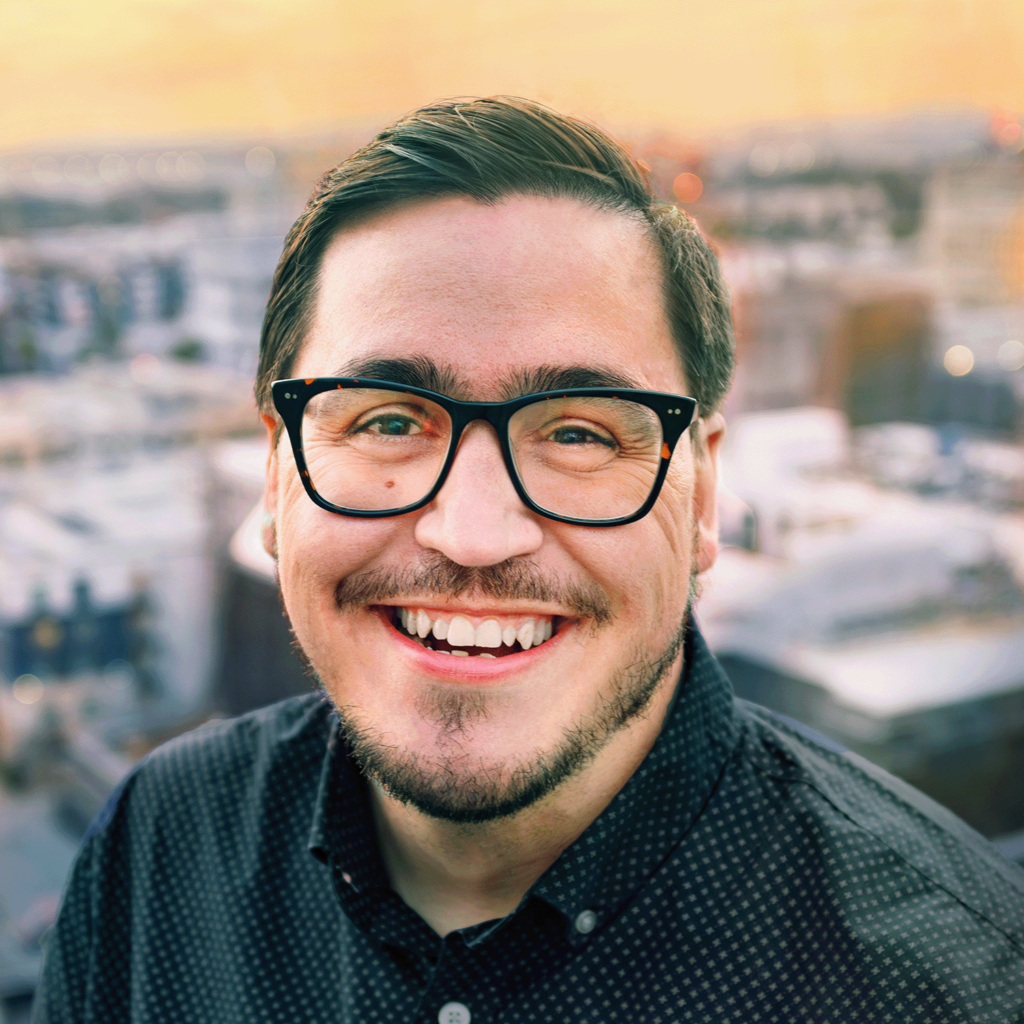
Now/Next: I am open to fractional CxO roles or a full-time position as a Senior Product Manager/Technical Lead, focusing on the intersection of technology, media, and social impact.
Long before I wrote a line of code, I grew up navigating the spaces between different cultures. As a child of deaf adults (CODA), my first language was visual, spatial, and deeply contextual. This was layered on top of the intersectional, first-generation immigrant communities I grew up in, where reading the subtle shifts in a room was a primary skill. I had to learn what things truly meant, often inventing new linguistic concepts because there was no direct ASL equivalent for an English phrase. I developed a capacity for empathy and observation that has been the foundation of everything that followed.
My career began with the smell of ink and the relentless pace of a daily deadline. From a technical high school, I moved into the world of desktop publishing, winning numerous awards for design and leadership at Fullerton College—culminating in the Associated Collegiate Press’ Pacemaker Award for the FC Torch, the nation’s highest honor for a student-produced magazine, in 2009. That early recognition opened doors. I found myself in the design rooms of automotive media like Lowrider Magazine and Motor Trend, in the photo studios for clients like Pacsun and Sur la Table, and owning the design brand for the college’s new STEM program, Project GPS².
At San Jose State University, I double-majored in anthropology, and have spent countless years reviewing cultural changes. I loved conducting archaeological fieldwork on an old sugar mill and plantation on the island of Nevis (the birthplace of Alexander Hamilton!). We learned extensively about the realities of 18th-century colonial life and their impacts today. My journalism colleague Matthew Gerring and I built the new SpartanDaily.com from the ground up, making it the second mobile-responsive news website in the country in 2011, just a week behind the Boston Globe. Under the mentorship of Pulitzer-winner Kim Komenich, I pushed deeper into visual storytelling, earning a spot at the prestigious Missouri Photo Workshop. A Dow Jones News Fund internship placed me at The Denver Post, where my work on their “Chasing the Beast” (the story of storm chaser Tim Samaras’ death) contributed to the project winning a national APME award for digital storytelling.
After another stint with agency work (working on international projects for clients like Herman Miller, Mazda, Apple and Disney) my path then led to home to Hollywood, where I led the digital and creative team that launched a college from scratch for Relativity Media, a major film studio. We used then-radical approaches in targeted social media to build an innovative school on a movie studio lot, earning a GDUSA Top Website Design Award in 2015 for our efforts. I wasn’t just behind a desk; I wore many hats, from designing countless graphics/sfx and developing props for our productions to occasionally jumping on set as an background extra or a camera/lighting grip when the call went out. (I even earned a couple of IMDB credits for our student shorts!)
Just as the printing press gave way to the content management system, my focus shifted from page layout to system architecture. I spent six years at XWP, heading up product strategy and partnerships. There, I was the translator between executive boardrooms and engineering teams, orchestrating complex initiatives for giants like Google, The Wall Street Journal, and Rolling Stone. Besides speaking at in-person tech conferences on three continents, I helped launch Google’s “AMP for WordPress” plugin, growing it to over 600,000 installs, and managed a portfolio of high-stakes partnership projects that collectively served over a billion page views daily.
After operating at that massive scale, I felt a pull back to the ground level, to the point of friction where people meet systems. This curiosity led me back to independent studio work, focusing more directly on applied research and production. Working directly with clients is more intimate, and I often embed myself in their workflows to understand the true nature of a problem. For one client, this meant seeing firsthand how their poorly designed software was creating stress. So I built a tool to fix it: a market-aware, custom AI-powered forecasting agent that predicts demand and prevents waste. We engineered in now-widespread practices of “human in the loop,” giving staff agency to both intervene when things go wrong as well as incentives to highlight good data when it’s right.
My current client focus includes architecting an AI-driven cultural preservation effort for a local nonprofit and directing digital operations for Miyasaki Gallery. My personal materials research, tech experiments, and art all live under the banner of Paperboy Post, my arts and research studio. The right fix for a complex AI model or a simple conversation becomes obvious when you truly listen. This is the work that drives me: understanding human contexts to alleviate stress and align opportunities.
My goals are the same as they were in the newsroom: to build with boldness and listen with intent. As a creative technologist and media anthropologist, I’m still obsessed with the fundamentals of structure and storytelling. I am always translating between technical possibility and human reality. I’m most at home where the map ends, and I’m ready to build the path forward.
View my LinkedIn » or Read my Resume »